IntelliCAD History: Software Evolution and Development
M. Murali Krishna ·
IntelliCAD history and development
The IntelliCAD history and development journey is an interesting story of innovation, collaboration and continuous improvement in the CAD industry. From its beginnings in the 1990s to the latest IntelliCAD 15.0 release in 2026, IntelliCAD has evolved into an established CAD technology platform used by several commercial software developers worldwide.
Over the years, IntelliCAD has gone through significant changes in ownership, development and technology. Its journey includes organizations such as Softdesk, Boomerang Technologies, Visio Corporation, the IntelliCAD Technology Consortium (ITC) and the Open Design Alliance (ODA).
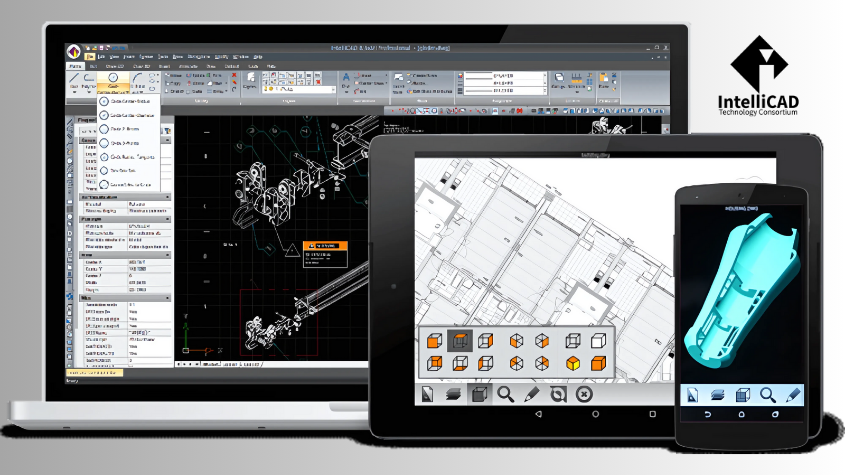
Today, IntelliCAD provides a foundation for commercial CAD applications used by architects, engineers, designers and other professionals. Companies such as ACTCAD use IntelliCAD technology to develop professional CAD solutions with additional features and capabilities.
In this article, we explore the history of IntelliCAD, its major development milestones, important software versions and its role in the modern CAD industry.
1. The Beginning of IntelliCAD: Early 1990s
The history of IntelliCAD began in the early 1990s. In 1994, Softdesk started developing a CAD application called IntelliCADD. The development was outsourced to a third-party software development team based in San Diego, California, USA.
The primary objective was to develop a CAD application that could offer functionality similar to AutoCAD while providing an alternative platform for professional drafting and design.
At that time, Softdesk was one of the major third-party developers in the Autodesk software ecosystem. It developed various engineering and design applications for AutoCAD users.
IntelliCADD was intended to become an independent CAD application rather than simply another add-on for existing CAD software. This development laid the foundation for what would eventually become the IntelliCAD platform.
2. Softdesk, Autodesk and Boomerang Technologies
In December 1996, Autodesk acquired Softdesk. This acquisition created uncertainty about the future of IntelliCADD because the software had the potential to compete with AutoCAD.
Following intervention by the US Federal Trade Commission (FTC), the rights to IntelliCADD were transferred to Boomerang Technologies. Visio Corporation subsequently acquired Boomerang and continued the development of IntelliCADD.
This transition allowed IntelliCADD to continue its development outside Autodesk and established the foundation for its independent commercial future.
3. Visio Corporation and IntelliCAD 98
Visio Corporation continued developing IntelliCADD and worked to make it a commercial CAD product.
In January 1998, Visio acquired MarComp, a company that developed technology for reading and writing DWG files. This technology became an important component of IntelliCAD's DWG compatibility.
Visio also helped establish the OpenDWG Alliance in February 1998, providing a foundation for wider collaboration around DWG interoperability.
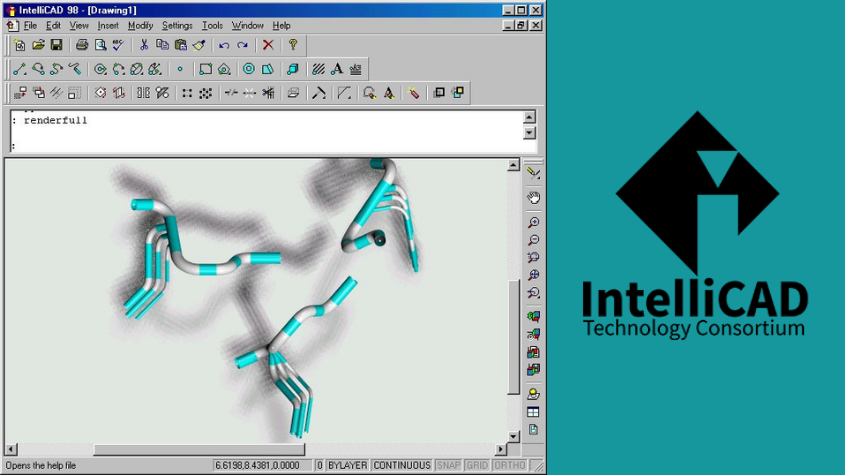
IntelliCAD 98 marked an important milestone in the development of commercial IntelliCAD software.
In March 1998, Visio released IntelliCAD 98. This was a major milestone because IntelliCAD became commercially available as an independent CAD application.
The software offered an alternative for users who needed professional CAD drafting capabilities and DWG file compatibility.
4. Formation of the OpenDWG Alliance and Open Design Alliance
One of the important developments in IntelliCAD history and development was the formation of the OpenDWG Alliance.
The organization was established in February 1998 with support from Visio Corporation. Its objective was to support DWG interoperability and provide software developers with technology for working with DWG files.
The OpenDWG Alliance later became the Open Design Alliance (ODA).
ODA developed technologies and software development libraries that support the reading, writing and visualization of engineering design formats, including DWG and DGN.
One of its earlier technology brands was Teigha. In 2018, ODA announced that it would discontinue the Teigha brand and consolidate its technology under the ODA name.
ODA has continued to play an important role in CAD interoperability by providing technology that software developers can use to work with industry-standard drawing formats.
5. Formation of the IntelliCAD Technology Consortium (ITC)
In July 1999, Visio established the IntelliCAD Technology Consortium (ITC) to support the continued development of IntelliCAD.
The consortium was created as an independent, member-driven, non-profit organization. Its purpose was to develop the core IntelliCAD technology and allow commercial software companies to build their own CAD applications using the platform.
In September 1999, Microsoft acquired Visio Corporation. However, IntelliCAD's development continued independently under the ITC.
This was one of the most important turning points in IntelliCAD history and development. Instead of relying on one software company, IntelliCAD adopted a consortium-based development model. This allowed multiple commercial members to participate in improving the technology.
6. IntelliCAD 2000: Independent Development Continues
IntelliCAD 2000 continued the platform's development under the ITC.
IntelliCAD 2000 was released on March 6, 2000, under the ITC's independent development program.
This release marked the beginning of a new phase for IntelliCAD. The ITC continued improving the core CAD engine, while commercial members began using the technology to develop their own products.
Some third-party components required separate royalty payments, which affected the features that could be included in freely distributed versions.
Despite these limitations, IntelliCAD continued to attract software developers interested in creating CAD applications without developing an entire CAD engine from scratch.
7. IntelliCAD 6: Growth of the Commercial Ecosystem
IntelliCAD 6 represented another stage in the platform's development.
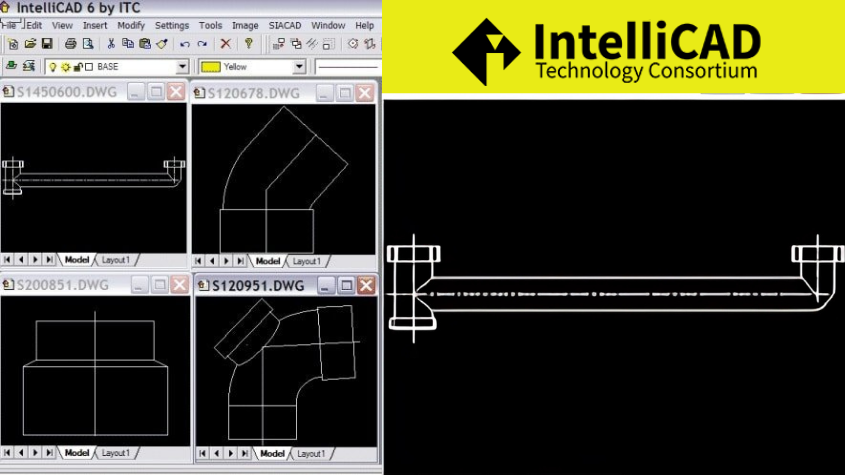
IntelliCAD continued to evolve through several releases, including IntelliCAD 6.
This generation represented an important stage in the platform's development, with continued improvements in drafting tools, drawing compatibility and application functionality.
The growing ITC membership also helped expand the IntelliCAD ecosystem. Commercial members began developing products for different professional requirements, including:
General-purpose CAD drafting.
Architectural design.
Civil engineering.
Land surveying.
Construction and manufacturing.
Specialized engineering applications.
8. IntelliCAD 7 and Continued Platform Development
IntelliCAD 7 continued the development of the core CAD platform.
IntelliCAD 7 continued the development of the platform with improvements to its CAD engine and development capabilities.
The ITC's member-driven model allowed commercial developers to build their own applications using the core IntelliCAD technology.
Each commercial member could customize the platform, add specialized tools and introduce additional features according to its target market.
9. IntelliCAD 8 and IntelliCAD 8.4
IntelliCAD 8 introduced further improvements to the CAD platform.
The development of successive IntelliCAD 8 releases focused on enhancing drafting functionality, compatibility, performance and user productivity.
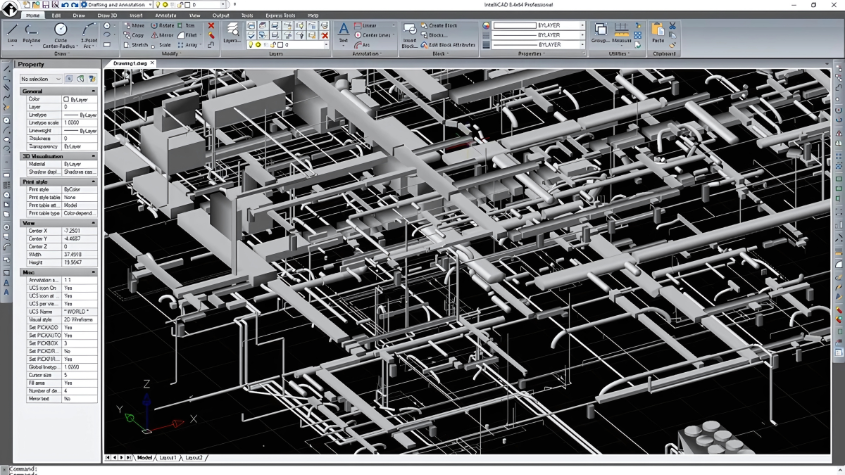
IntelliCAD 8.4 became one of the later releases in this generation. However, IntelliCAD's development did not stop at version 8.4. The ITC continued releasing newer generations of the platform, introducing improvements to the user interface, APIs, customization tools, file compatibility and modern CAD workflows.
10. IntelliCAD 12, 13 and 14: Modernization of CAD Technology
The later generations of IntelliCAD introduced further improvements to the platform.
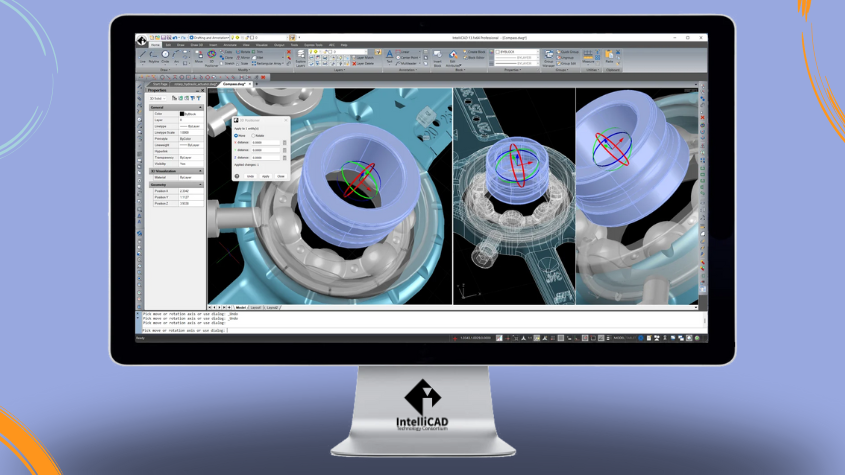
The development focus expanded beyond traditional 2D drafting to include more advanced 3D modeling, application customization, developer APIs, BIM-related capabilities and improved user productivity.
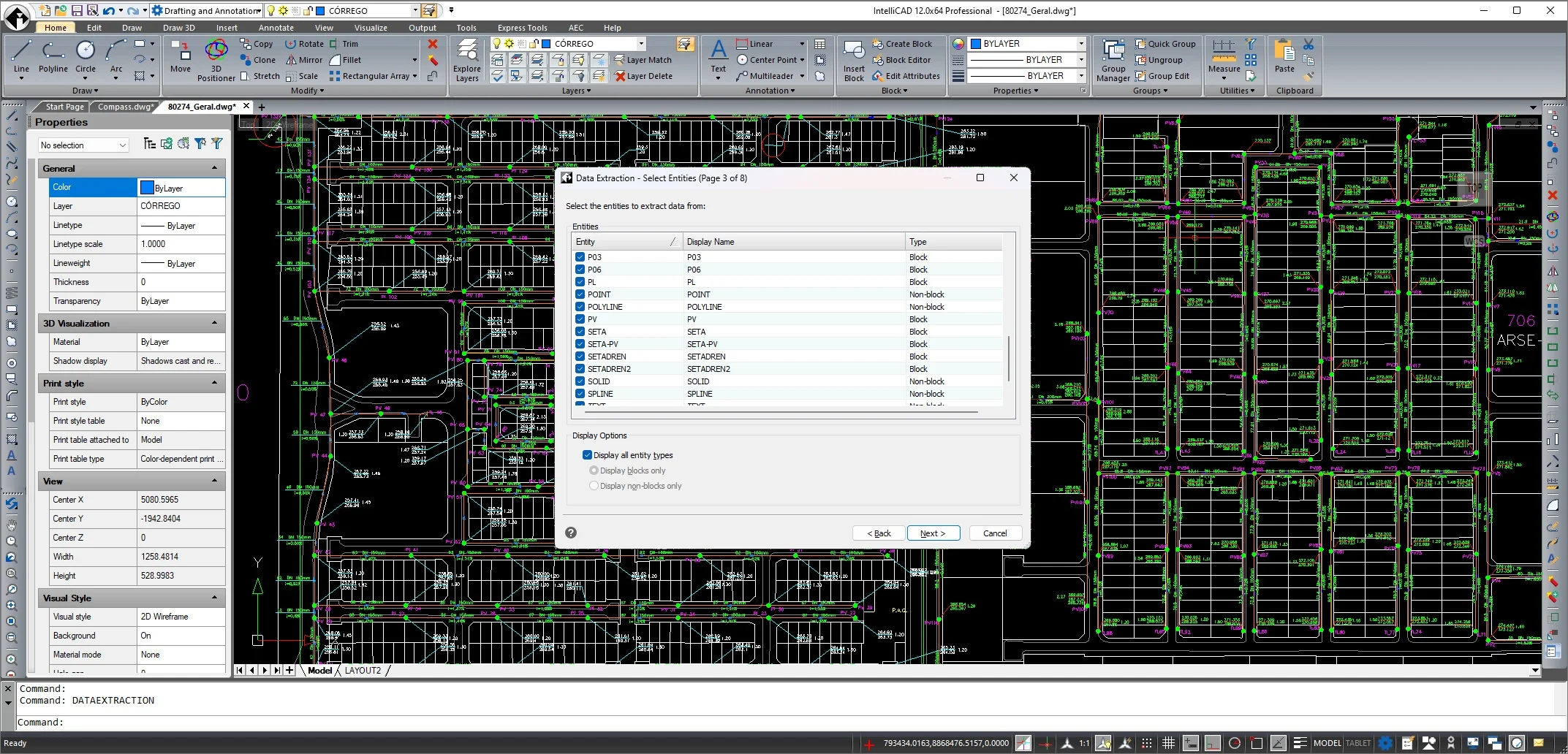
IntelliCAD 14.0, announced in 2025, introduced improvements to the interface, performance and everyday CAD workflows.
Some of the developments included:
Dark, light and gray user interface themes.
Improvements to common editing operations.
Enhanced table functionality.
Additional productivity commands.
Developer tools and API improvements.
Better support for modern CAD workflows.
IntelliCAD 14.1 followed in December 2025 with further stability, performance and functionality improvements.
11. IntelliCAD 15.0: Latest Development in 2026
The latest major milestone in IntelliCAD history and development is IntelliCAD 15.0, announced by the ITC in August 2026.
This release introduced developments in LISP programming, drawing comparison and AI-assisted CAD workflows.
Modernized LISP Engine
IntelliCAD 15.0 includes a modernized LISP engine. LISP is widely used by CAD professionals to automate repetitive tasks, create custom commands and develop specialized drafting tools.
Drawing Compare
The Drawing Compare command allows users to compare two drawings and visually identify differences. This functionality can help professionals review drawing revisions and identify changes between different versions of a design.
AI-Assisted CAD Workflows
IntelliCAD 15.0 also introduced previews of AI-assisted CAD features for supported program versions. These features allow users to interact with drawings through natural-language prompts.
Depending on the supported implementation, users can ask questions about drawing data, select entities, retrieve information and generate or run custom LISP programs.
Developer API Improvements
IntelliCAD 15.0 includes improvements to its developer APIs, giving commercial members additional capabilities when developing and extending their applications. The release also includes improvements to BIM workflows, printing, user interface functionality and general performance.
These developments show that IntelliCAD is moving beyond traditional drafting functionality and adapting to emerging technologies in the CAD industry.
Note: Some Drawing Compare and AI-assisted capabilities were announced as feature previews. Availability can depend on the specific IntelliCAD-based product and its implementation.
12. What Is the Role of the IntelliCAD Technology Consortium Today?
The IntelliCAD Technology Consortium is an independent, member-driven, non-profit organization that develops and maintains the IntelliCAD platform.
Its main responsibility is to develop the core CAD technology and provide it to commercial members.
The ITC ecosystem includes:
ITC Development Team: Responsible for developing and maintaining the core IntelliCAD technology.
Commercial Members: Independent software companies that develop, market, sell and support their own IntelliCAD-based products.
ITC Board of Directors: Provides direction and decision-making for the consortium.
The ITC does not directly sell end-user CAD products. Instead, its commercial members use the platform to develop and distribute their own applications.
13. Is IntelliCAD an Open-Source CAD Software?
One common question about IntelliCAD is whether it is completely open-source software.
IntelliCAD is not a fully open-source CAD application. The ITC provides access to the IntelliCAD source code and development resources to eligible commercial members under its membership agreements.
This controlled access allows member companies to customize the platform, develop additional functionality and create commercial CAD products. The source code is not freely available to everyone under an unrestricted open-source license.
14. ACTCAD and Its Relationship with IntelliCAD
ACTCAD is one of the commercial CAD solutions developed using IntelliCAD technology.
As an ITC member, ACTCAD uses the IntelliCAD platform as the foundation for its CAD software and develops additional capabilities to meet professional drafting and design requirements.
ACTCAD provides CAD tools for architects, engineers, designers, manufacturing professionals and other technical users.
Depending on the edition and product release, ACTCAD offers features such as:
2D drafting and drawing editing.
3D modeling and visualization.
DWG and DXF file compatibility.
LISP customization and automation.
Professional drafting and design tools.
Productivity features for engineering workflows.
ACTCAD demonstrates how commercial members can use the IntelliCAD platform to develop their own CAD applications with additional features and product-specific capabilities.
For users comparing CAD software, it is important to evaluate the individual product's features, compatibility, licensing and technical support rather than assuming that all IntelliCAD-based applications are identical.
15. Future of IntelliCAD Technology
The history of IntelliCAD shows how a CAD development project from the 1990s has grown into a technology platform supporting multiple commercial software applications.
Its evolution has been driven by continuous improvements in drafting functionality, file compatibility, developer tools, customization and performance.
The latest IntelliCAD 15.0 developments in 2026 demonstrate the platform's continued focus on modern CAD requirements.
AI-assisted workflows, improved LISP capabilities and drawing comparison are examples of how the platform is adapting to changing user expectations.
Frequently Asked Questions About IntelliCAD History and Development
1. When did IntelliCAD development begin?
IntelliCAD's roots go back to 1994, when Softdesk began developing IntelliCADD. The first commercial release, IntelliCAD 98, was announced by Visio Corporation in March 1998.
2. Who originally developed IntelliCAD?
Softdesk began developing IntelliCADD in 1994, outsourcing the development to a third-party team in San Diego, California. The technology subsequently passed through Boomerang Technologies and Visio Corporation before its continued development under the ITC.
3. What is the IntelliCAD Technology Consortium?
The IntelliCAD Technology Consortium (ITC) is an independent, member-driven, non-profit organization that develops and maintains the IntelliCAD platform. Its commercial members use the technology to create their own CAD applications.
4. What is the relationship between IntelliCAD and ODA?
The Open Design Alliance develops technology that supports interoperability with engineering and design file formats such as DWG and DGN. IntelliCAD uses ODA technology as part of its file compatibility and data-handling capabilities.
5. Is IntelliCAD open-source software?
No. IntelliCAD is not completely open-source software. Its source code and development resources are available to eligible ITC members under controlled membership agreements.
6. What is the latest IntelliCAD version in 2026?
IntelliCAD 15.0 is the latest major version announced by the ITC as of November 2026. It includes a modernized LISP engine, Drawing Compare and AI-assisted feature previews.
7. Is ACTCAD based on IntelliCAD?
Yes. ACTCAD is a commercial CAD application developed using IntelliCAD technology. It provides additional product-specific features and tools for professional drafting and design.
8. Do all IntelliCAD-based products have the same features?
No. Commercial members can customize the IntelliCAD platform and add their own commands, tools and specialized functionality. Therefore, the features, licensing and support policies can differ between IntelliCAD-based products.
Conclusion
The IntelliCAD history and development journey reflects the growth of an independent CAD technology platform through collaboration between software developers and commercial organizations.
From IntelliCADD in 1994 and IntelliCAD 98 in 1998 to the formation of the ITC and the latest IntelliCAD 15.0 release in 2026, the platform has undergone significant technological changes.
The involvement of the Open Design Alliance, the ITC development team and commercial members has helped expand IntelliCAD into a broader CAD software ecosystem.
ACTCAD is part of this ecosystem, using IntelliCAD technology to provide professional drafting and design solutions.