
IntelliCAD Milestones and Roadmap: The Evolution of IntelliCAD from 1999 to 2026

IntelliCAD Milestones and Roadmap: The Evolution of IntelliCAD from 1999 to 2026
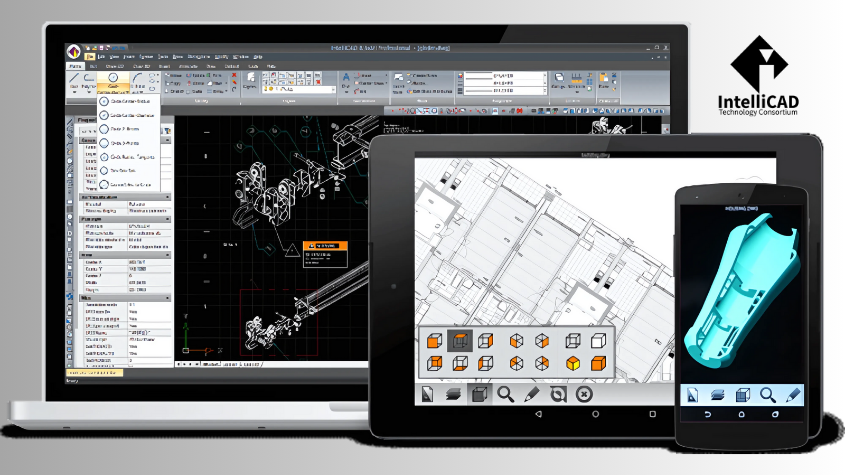
IntelliCAD has evolved significantly since its early development into a professional CAD platform used by software developers and CAD users around the world. Over the years, it has introduced improvements in 2D drafting, 3D modelling, DWG compatibility, customisation, application development and industry-specific design workflows.
The development of IntelliCAD is closely connected with the IntelliCAD Technology Consortium (ITC) and the Open Design Alliance (ODA). Their contributions have helped build and advance the technology used by many CAD applications.
In this article, we explore the major IntelliCAD milestones, important software releases, the role of ITC and ODA, and the direction of modern IntelliCAD development.
What Is IntelliCAD?
IntelliCAD is a CAD software platform developed and maintained through the IntelliCAD Technology Consortium. It provides a foundation for creating CAD applications with tools for drafting, design, file compatibility and customisation.
ITC members use IntelliCAD technology to develop and market their own CAD products. These products may have different names, interfaces, features, editions and licensing models, depending on the individual member.
IntelliCAD is therefore more than a single end-user CAD product. It is a technology platform that supports a wider ecosystem of CAD applications.
Formation of the IntelliCAD Technology Consortium (1999)
The IntelliCAD Technology Consortium (ITC) was formed in 1999 as an independent, member-driven, non-profit organisation.
Its objective was to support collaborative CAD software development and provide a technology platform that commercial members could use to create their own CAD applications.
The consortium model allows members to contribute to the development of IntelliCAD while building products suited to their customers and markets.
This structure became an important part of IntelliCAD's development and continues to distinguish its technology ecosystem.
IntelliCAD Development Timeline and Major Milestones
IntelliCAD's development can be understood through its major releases and the improvements introduced over time.
1999 – Formation of ITC
The IntelliCAD Technology Consortium was established in 1999. This created an organised structure for collaborative development of the IntelliCAD platform.
2001 – IntelliCAD 3
IntelliCAD 3, also known as IntelliCAD 2001, introduced several important improvements, including:
-
Complex linetype support
-
XREF clipping
-
Display and printing of ACIS 3D solids
These features expanded IntelliCAD's capabilities for professional drafting and technical design.
2002 – Developer Documentation
ITC released a development guide that explained how developers could access IntelliCAD source code, submit code for review and follow development guidelines.
This was an important step in supporting a collaborative developer community.
2003 – IntelliCAD 4
IntelliCAD 4 introduced several improvements, including:
-
Multiple drawing layouts
-
A new display engine
-
Improved display performance
-
ACIS solid modelling
-
Better memory management
These improvements helped strengthen the platform for professional CAD workflows.
2004 – IntelliCAD 5
IntelliCAD 5 introduced tabbed workspaces and DWF file support. ITC also announced a partnership with SolidWorks during this period.
The release represented another step in expanding the platform's functionality and interoperability.
2008 – IntelliCAD 7
IntelliCAD 7 marked an important architectural change by adopting the Open Design Alliance (ODA) platform.
Its development included improvements in DWG compatibility and developer capabilities.
Important features included:
-
Support for AutoCAD DWG 2010 format
-
Support for custom objects
-
Improved handling of architectural entities
-
DRX and IRX developer interfaces
-
Visual Studio development integration
-
Expanded internationalisation support
This release helped establish a stronger technical foundation for future IntelliCAD development.
2011 – IntelliCAD 7.0b
IntelliCAD 7.0b was a maintenance release that delivered improvements and fixes across the application.
Maintenance releases are important because they improve stability, address reported problems and refine existing features.
2012 – IntelliCAD 7.2a
IntelliCAD 7.2a included more than 700 improvements.
Important areas of improvement included:
-
DWG 2013 file conversion support
-
General application performance
-
Printing
-
Entity editing
-
Dimensioning
-
Entity snapping
This release focused on improving everyday drafting and editing operations.
2015 – IntelliCAD 8.1b
IntelliCAD 8.1b was released in October 2015 and included more than 140 improvements and fixes compared with the earlier 8.1a maintenance release.
Updates covered selection, the user interface, lofting, sweeping and other application areas.
2016 – IntelliCAD 8.2 and 8.2a
IntelliCAD 8.2 introduced several significant features and enhancements, including:
-
Exporting 3D PDF files
-
Additional 2D PDF export options
-
BMP export improvements
-
Better performance with complex blocks
-
Improved panning and zooming
-
Ribbon panel expanders and versioning
-
Ribbon customisation
The release also offered optional native DGN file support for opening, saving, creating and editing DGN drawings.
IntelliCAD 8.2a followed in August 2016 with more than 125 improvements and fixes, including updates to DGN files, external references and the user interface.
IntelliCAD Development After 2016
IntelliCAD continued to evolve after the 8.2 generation. Subsequent releases focused on improving the CAD engine, file interoperability, performance, customisation and support for specialised workflows.
2017–2019 – Expanding the Platform
During this period, IntelliCAD development continued to build on the ODA technology platform.
Development expanded beyond basic DWG file handling into areas such as:
-
Building Information Modelling (BIM)
-
Architectural entities
-
3D mesh modelling
-
Custom CAD objects
-
Mobile CAD development
-
Additional developer tools
IntelliCAD 9 and later platform development helped expand the possibilities for applications built on IntelliCAD technology.
2020–2023 – Continued Platform Development
IntelliCAD continued to receive improvements to its core CAD capabilities and development environment.
The broader development direction included improvements in:
-
Drawing compatibility and interoperability
-
CAD application performance
-
User interface and productivity
-
Developer APIs and customisation
-
BIM and industry-specific workflows
These developments helped ITC members continue building CAD applications for different professional requirements.
2024 – IntelliCAD 14
IntelliCAD 14 continued the platform's development with improvements to CAD functionality and developer capabilities.
The release also formed part of the ongoing effort to modernise the platform and provide ITC members with a stronger foundation for their own products.
2025 – IntelliCAD 14.1
IntelliCAD 14.1 was announced in December 2025. This update focused on stability, performance and improvements requested by ITC members.
One notable addition was the ability to export and print geospatial PDFs containing coordinate system information. The GEO map feature also gained support for Microsoft Azure Maps alongside existing map providers.
2026 – IntelliCAD 15.0
IntelliCAD 15.0 was announced in August 2026 and represents an important milestone in the platform's development.
Some of its notable developments include:
Modernised LISP engine
IntelliCAD 15.0 completed a multi-year modernisation of its LISP engine. The updated system supports compiling and loading protected LISP applications, providing developers with an improved foundation for custom CAD applications.
Drawing Compare preview
The new Drawing Compare feature preview allows users to compare two drawings side by side and visually identify differences.
AI-assisted CAD workflow preview
For supported IntelliCAD versions, an AI feature preview introduces natural-language interaction with drawings. Users can ask questions, select drawing entities, retrieve information and generate or run custom LISP programs using supported AI services.
Developer API enhancements
The release also includes further improvements to developer APIs, helping ITC members extend and customise their applications.
Performance and interface refinements
Additional improvements address performance and user interface details throughout the application.
These developments demonstrate how IntelliCAD continues to evolve beyond traditional CAD drafting into more advanced and extensible design workflows.
Role of the Open Design Alliance (ODA) in IntelliCAD Development
The Open Design Alliance plays an important role in the IntelliCAD ecosystem.
ODA develops technology that supports access to and interoperability with CAD file formats such as DWG and DGN. Its platform provides components that can be used by software developers to read, visualise, create, edit and save supported design data.
IntelliCAD uses ODA technology as part of its CAD platform.
This relationship is important because reliable file compatibility is essential for professionals who exchange drawings with clients, consultants, manufacturers and other design teams.
ODA technology also supports development beyond traditional drawing formats, including BIM and other engineering-related data.
How Does the IntelliCAD Development Model Work?
IntelliCAD follows a consortium-based development model.
The IntelliCAD Technology Consortium develops and licenses its technology to commercial members. Members use the platform to build and market their own CAD applications.
The development model can be understood in three parts:
1. IntelliCAD Technology Consortium
ITC manages the IntelliCAD platform and provides its commercial members with technology, source code access, documentation and developer support under the applicable membership arrangements.
2. Open Design Alliance
ODA develops core interoperability technologies and software components used by IntelliCAD and other CAD applications.
3. Commercial ITC Members
Commercial members build their own CAD products using IntelliCAD technology. They can add product-specific features, interfaces, services, licensing models and support.
This structure allows different CAD products to share a common technology foundation while serving different user requirements.
IntelliCAD and ACTCAD: Understanding the Relationship
ACTCAD is a CAD software product developed by Jytra Technology Solutions. It is built using IntelliCAD technology.
This means ACTCAD benefits from the underlying IntelliCAD platform while being developed and delivered as its own commercial CAD product.
ACTCAD provides different editions for professional drafting and design requirements, including:
-
ACTCAD Standard: For 2D drafting and everyday CAD work.
-
ACTCAD Premium: For professional 2D drafting and 3D modelling workflows.
-
ACTCAD Map Drafter: For mapping, surveying and GIS-related drafting workflows.
The available features depend on the edition and product version.
For professionals evaluating CAD software, it is important to understand that an IntelliCAD platform release and an ACTCAD product release are not necessarily the same thing. Individual ITC members determine their product release schedules and may introduce their own enhancements and updates.
You can learn more about ACTCAD and its available editions on the official website: https://actcad.com/
What Does the Future Hold for IntelliCAD?
The future direction of IntelliCAD will depend on the needs of CAD professionals, software developers and ITC members.
Some important areas of continued development include:
Improved CAD interoperability: Reliable access to DWG, DGN and other design formats remains important for professional workflows.
BIM and specialised design: Continued development of BIM, architectural and engineering-related capabilities can support more specialised applications.
Automation and customisation: LISP, APIs and developer tools help organisations automate repetitive drafting tasks and create customised workflows.
AI-assisted design workflows: AI-related feature previews point towards new ways to interact with CAD drawings, retrieve drawing information and automate selected tasks.
Performance and usability: Faster drawing operations, improved navigation and more efficient interfaces remain important for everyday CAD users.
These are development areas and industry trends, not a guarantee of specific future release dates or features. Actual roadmap priorities are determined by ITC and its development process.
Conclusion: The Continuing Evolution of IntelliCAD
From the formation of ITC in 1999 to IntelliCAD 15.0 in 2026, IntelliCAD has undergone significant technical development.
Its evolution includes improvements in drafting, 3D modelling, DWG and DGN interoperability, developer tools, BIM capabilities, automation and AI-assisted workflows.
The combination of ITC's collaborative development model and ODA's interoperability technology has helped create a platform that supports a wide range of CAD applications.
For professionals looking for an IntelliCAD-based CAD solution, ACTCAD is one option to evaluate. Explore its editions, compare the available features and test the software using your own drawings.
Try ACTCAD on Your Own Drawings
Explore ACTCAD's professional CAD tools and evaluate the software with your actual projects.
Visit https://actcad.com/ to learn more about ACTCAD Standard, ACTCAD Premium and ACTCAD Map Drafter.
You can also explore the available free trial and decide whether ACTCAD suits your drafting and design requirements.


